Recorded at the Scrum Alliance’s Global Scrum Gathering in Orlando, FL, this episode features nine voices. Vic (@AgileCoffee) was joined by fellow participants (all working with Agile/Scrum teams) to discuss some highlights of the gathering (and CSP Fast Pass).
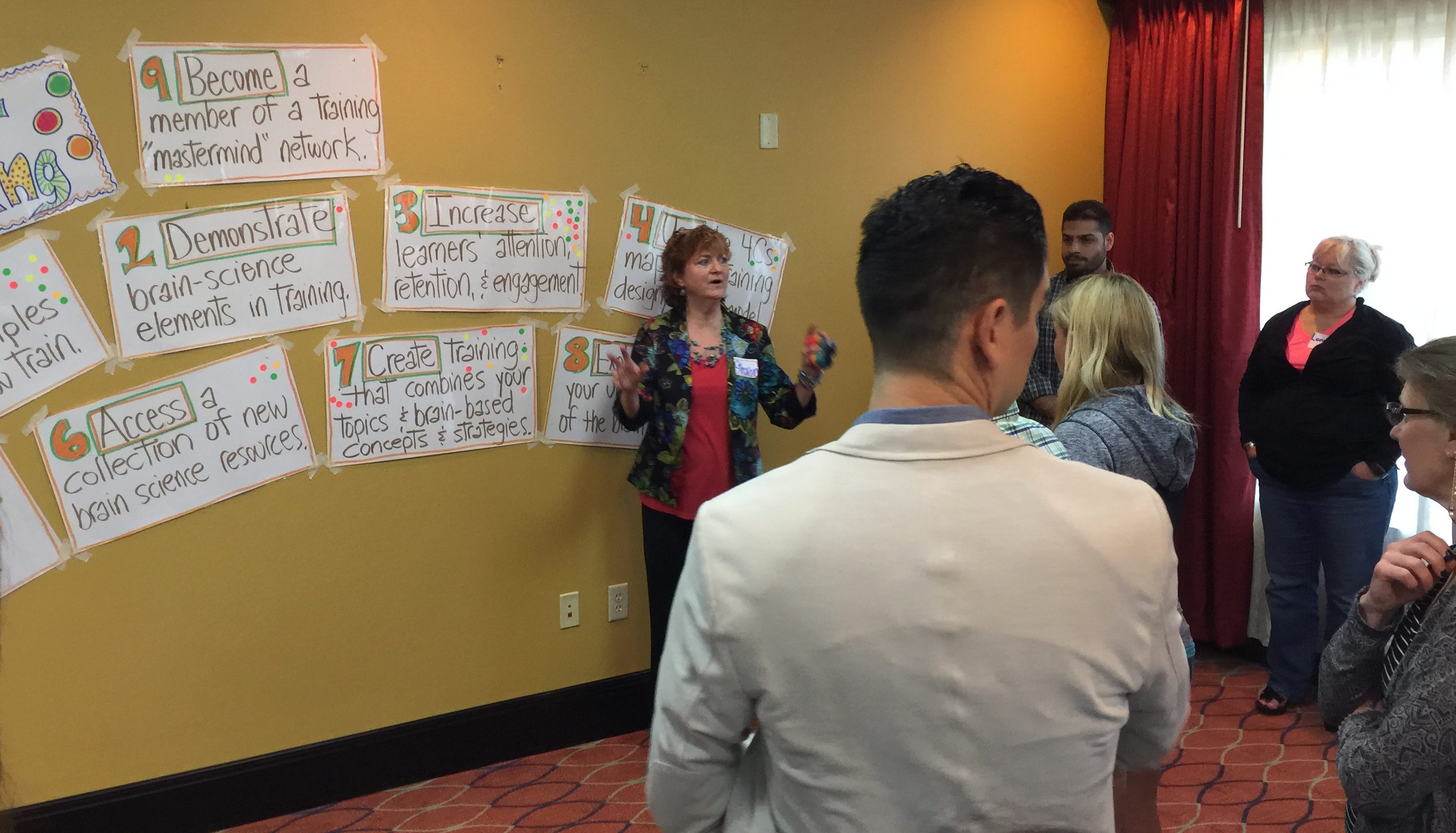
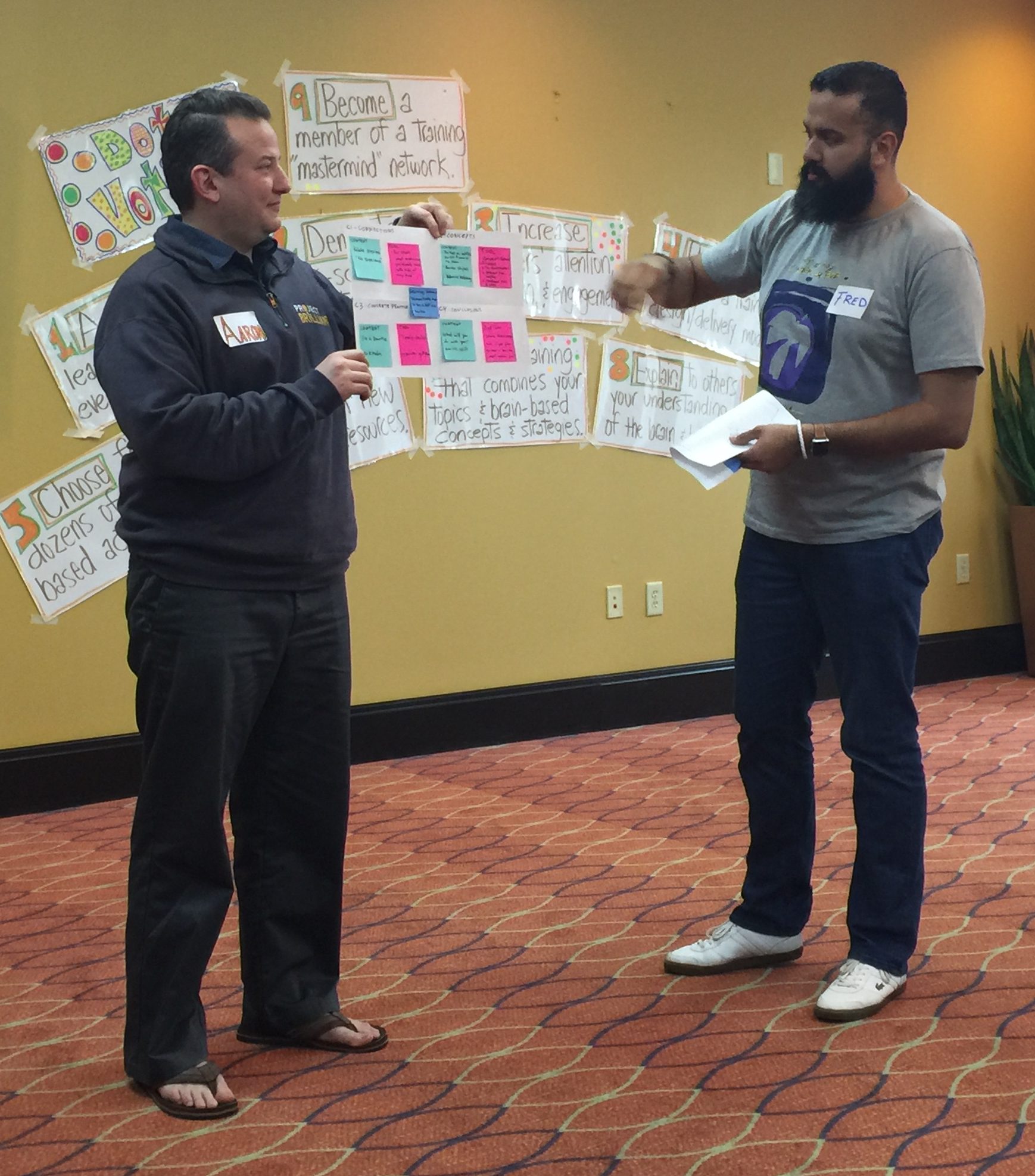
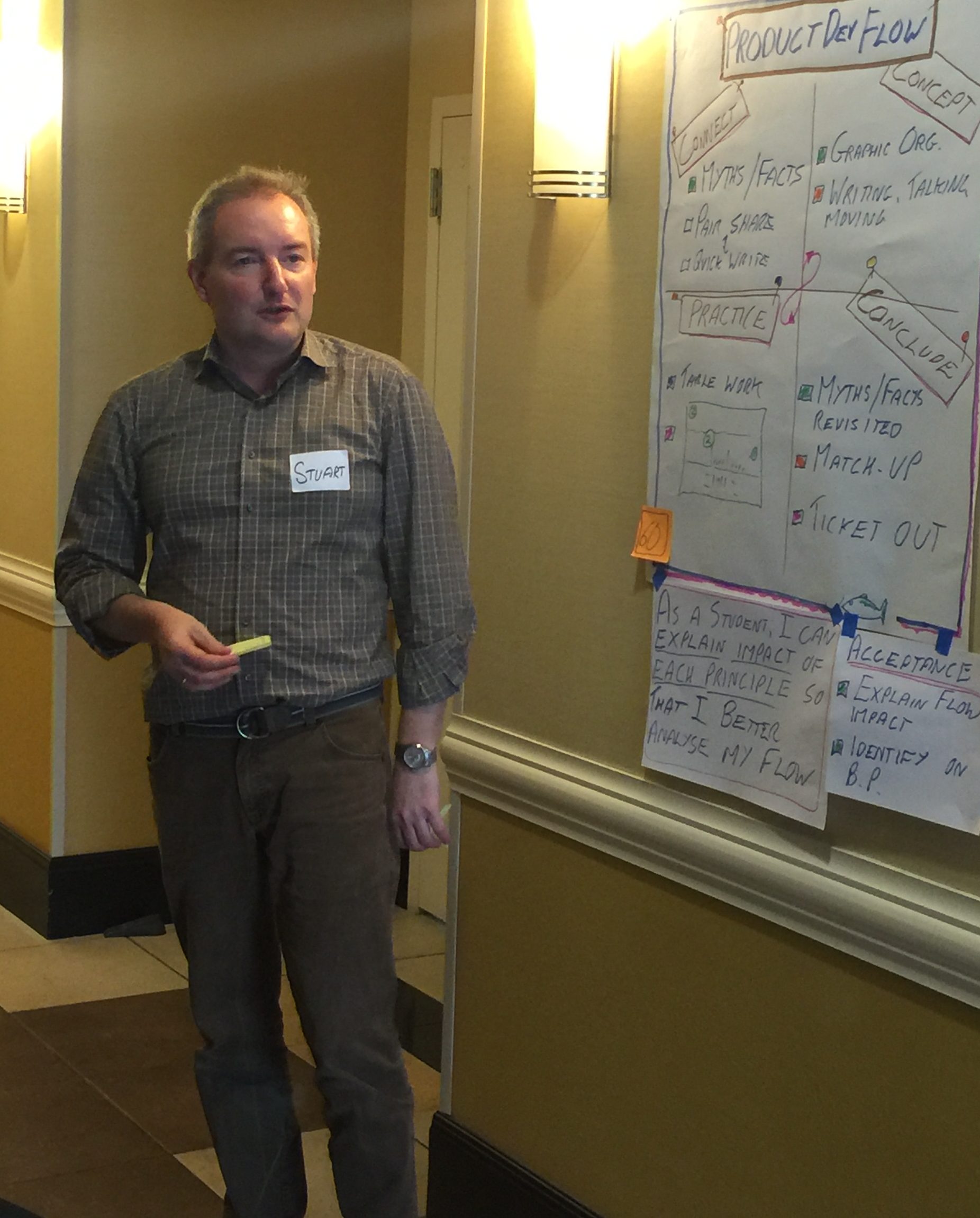
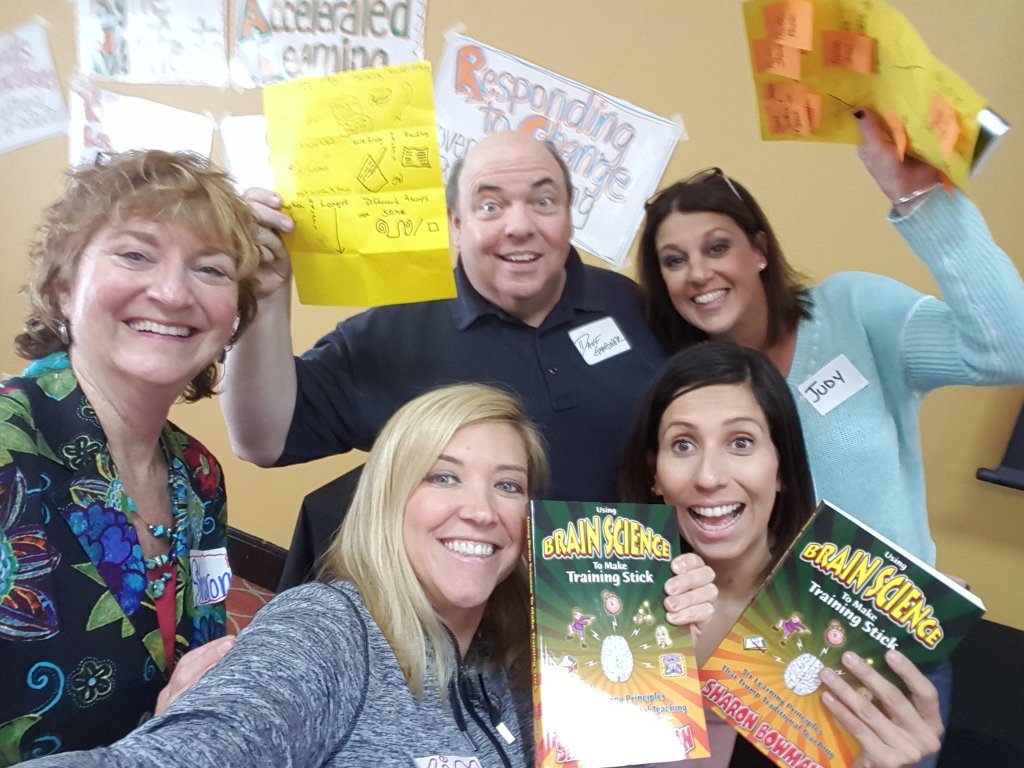
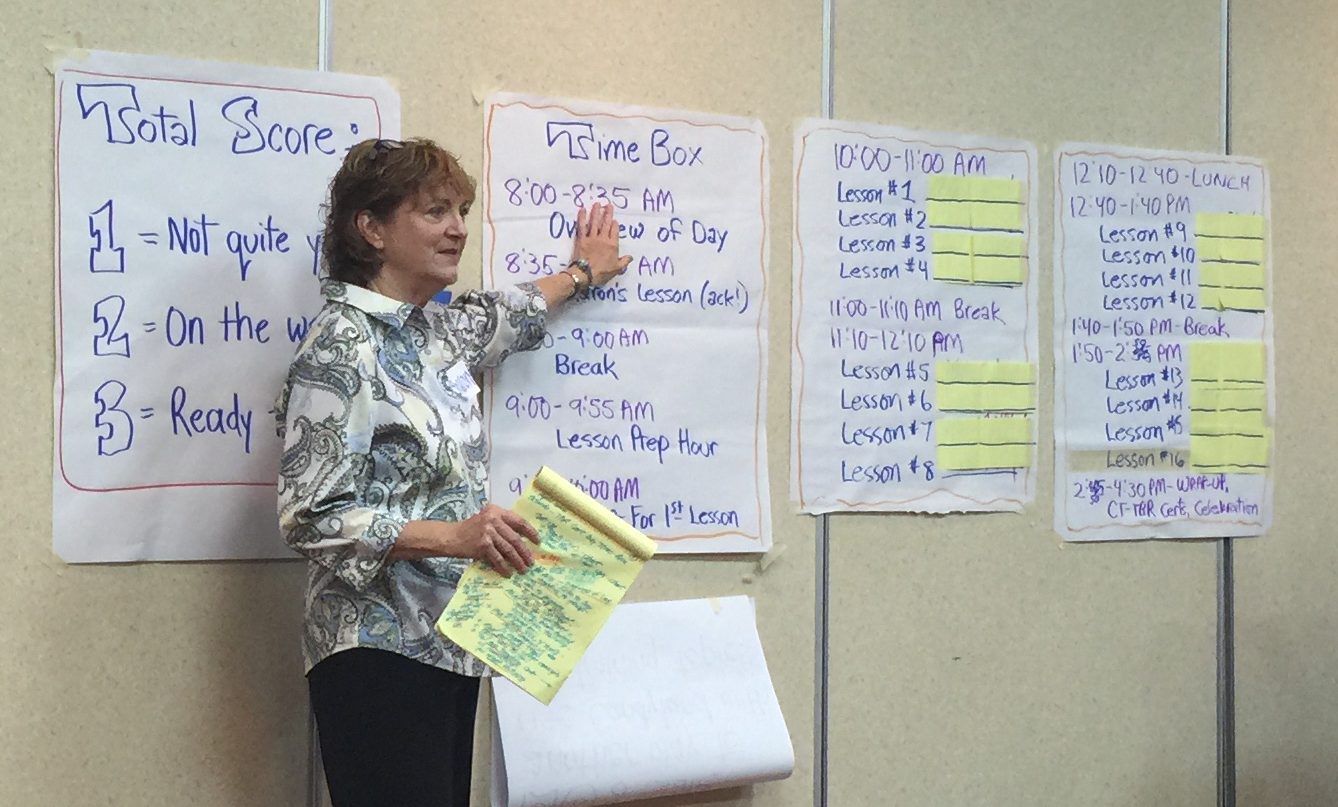
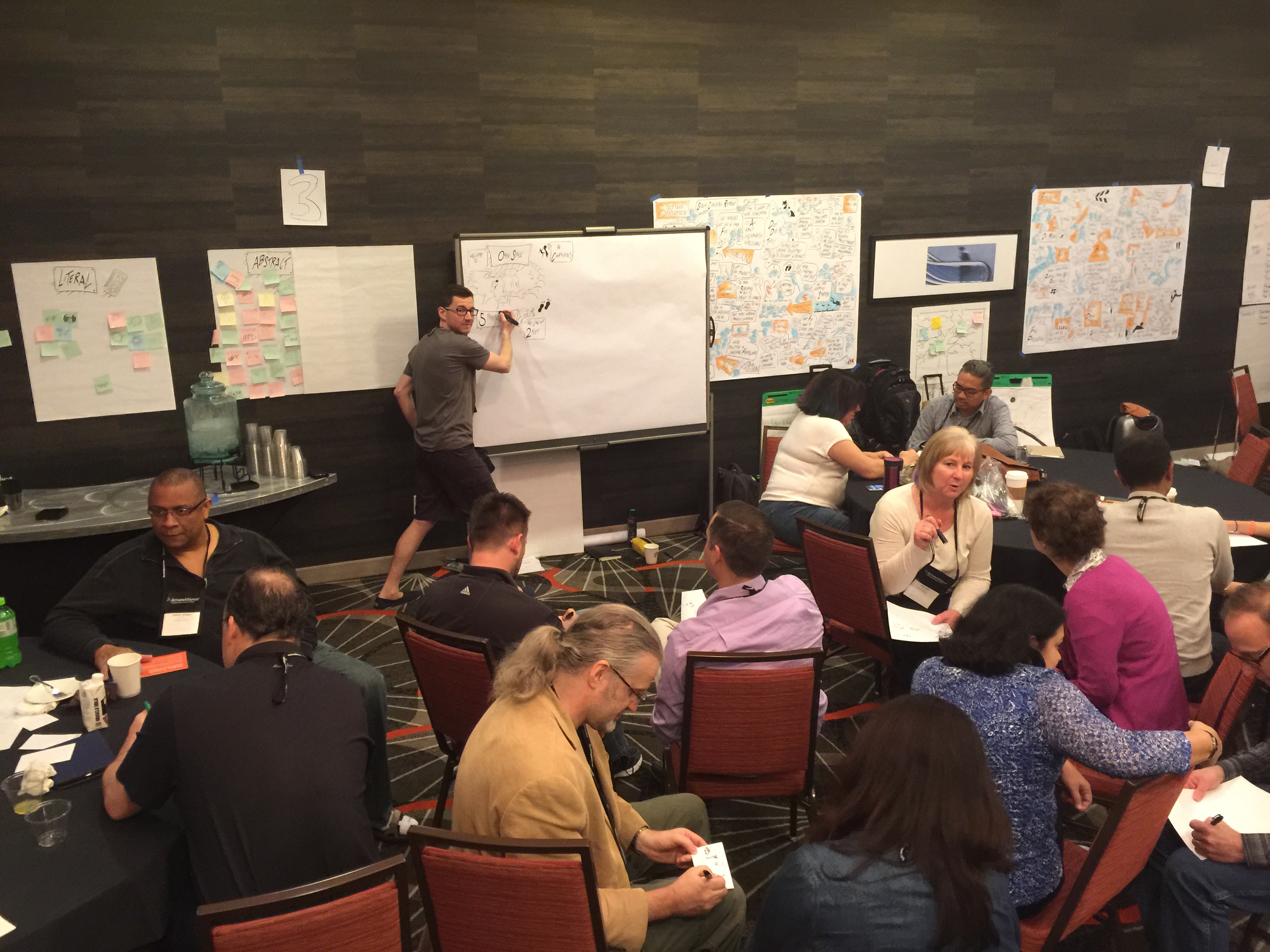
In the days leading up to the Global Scrum Gathering (Orlando, FL), the Braintrust Consulting Group organized a two-day “Training from the BACK of the Room” (TBR) workshop just up the road from the Loews Royal Pacific Resort. It was a fast-paced, high-energy two days with Sharon Bowman and 32 attendees, set in a large, comfortable room perfectly suited for a unique train-the-trainer experience.
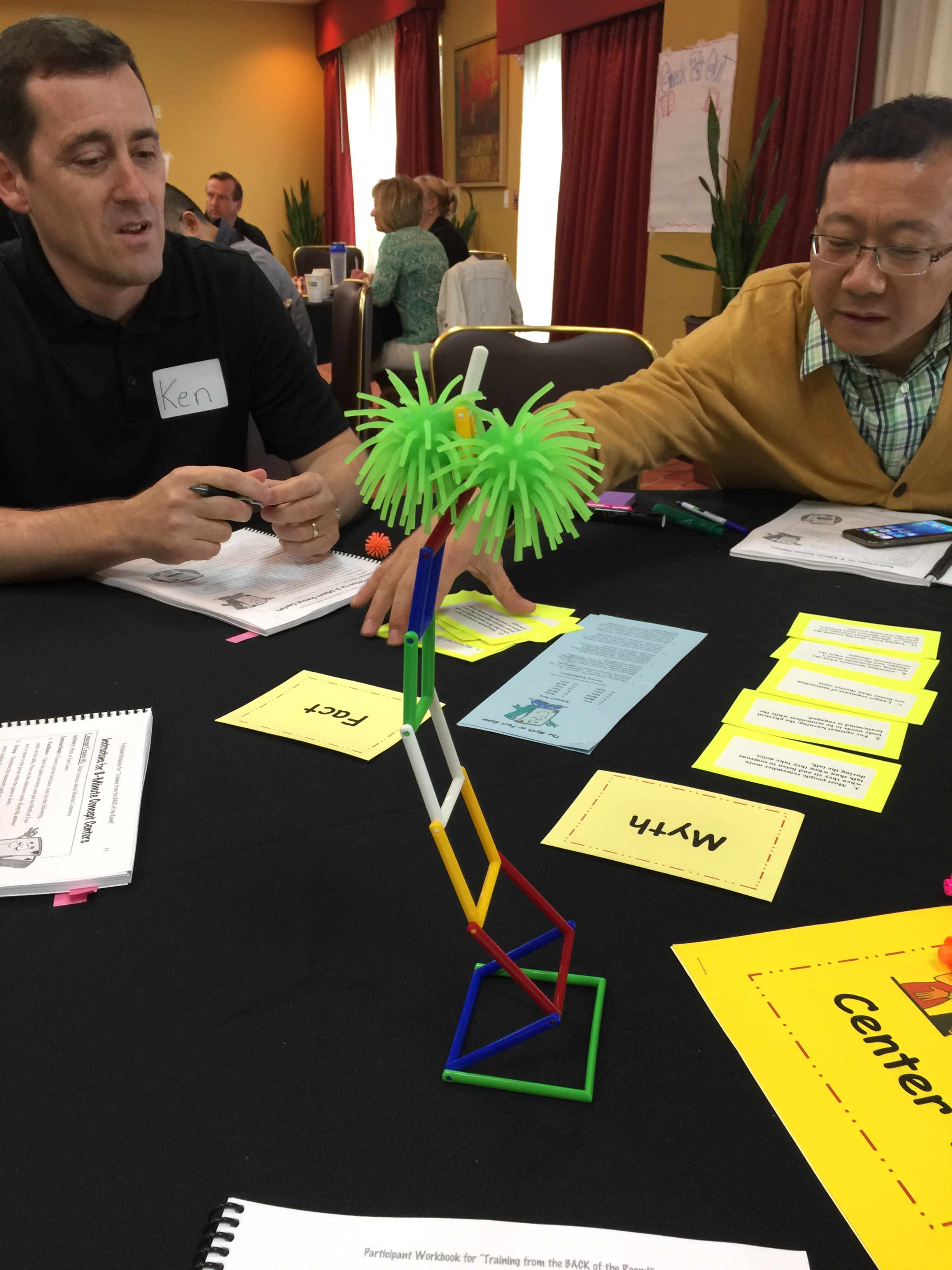
Before we began: the calmness from the BACK of the room.
I hadn’t previously met Sharon, but a year or so earlier I’d bought her book (Training From the Back of the Room!: 65 Ways to Step Aside and Let Them Learn), and I’d since begun dabbling with this accelerated learning model – combining brain science to training and (more recently) speaking & presenting. In fact, I was looking forward to getting a last burst of inspiration for my own presentation at the Scrum Gathering. (Spoiler Alert: I did!)
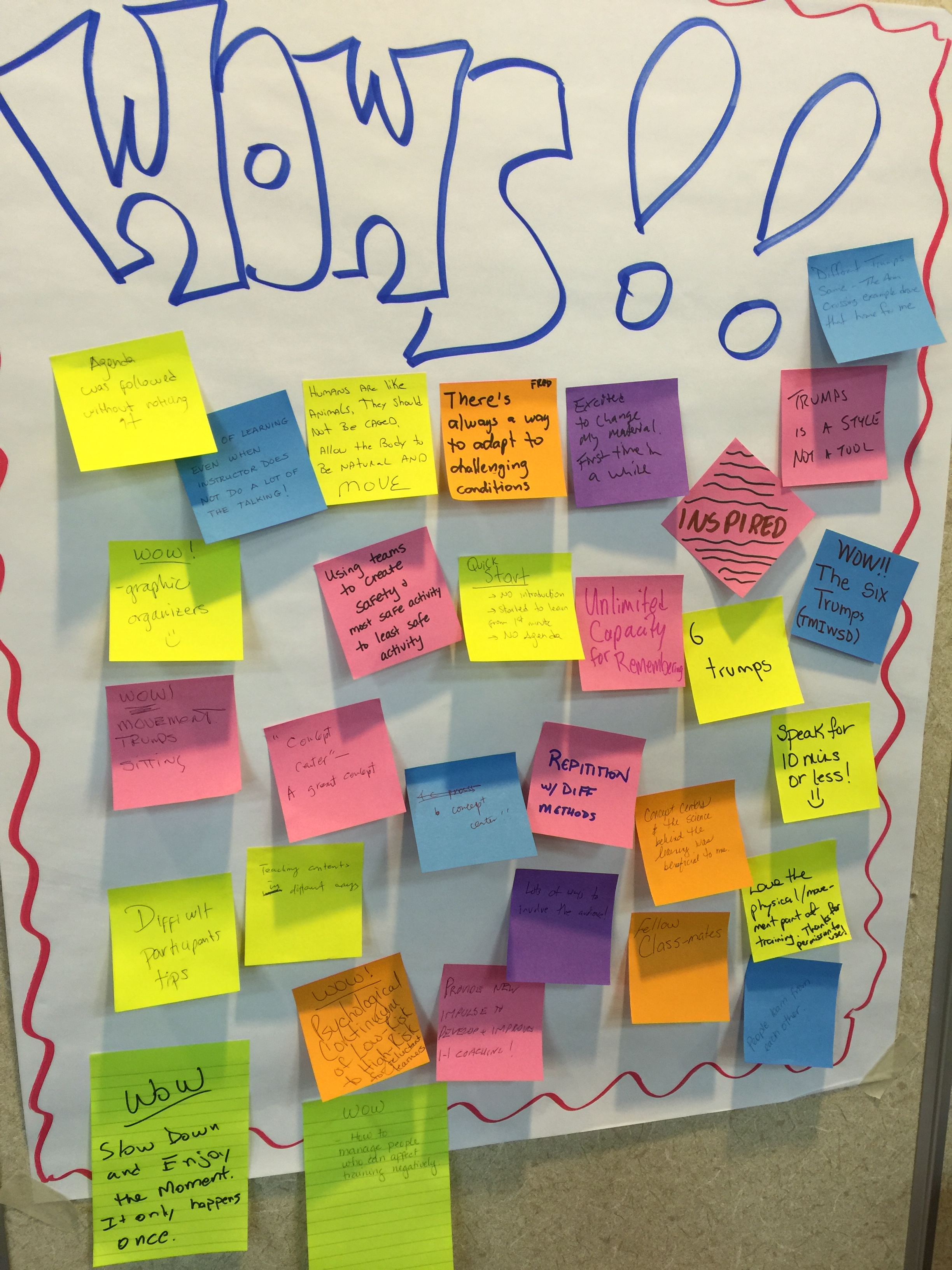
Different trumps Same
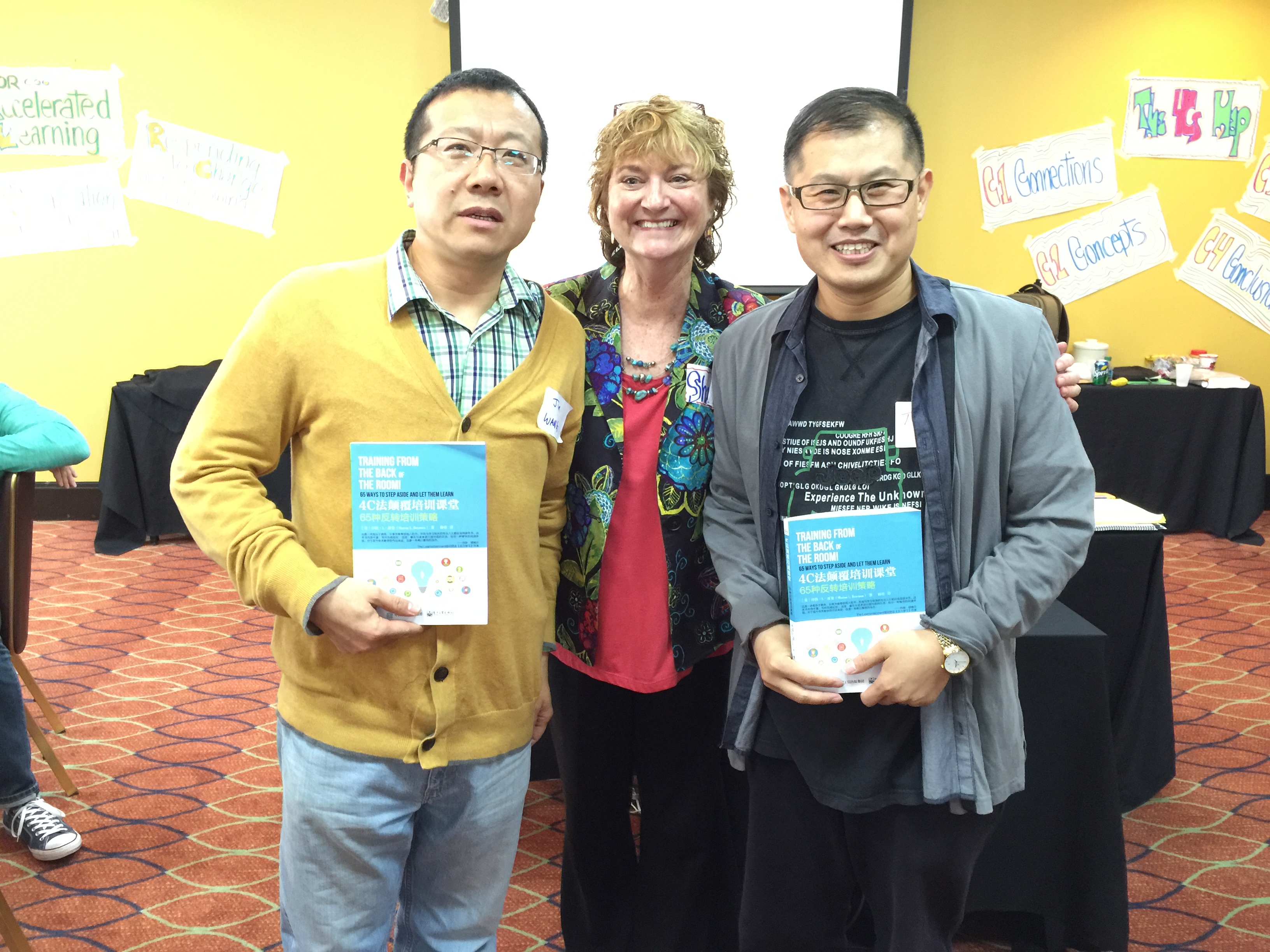
Jim and Tony came from China for the course… bringing translated copies of Sharon’s book.
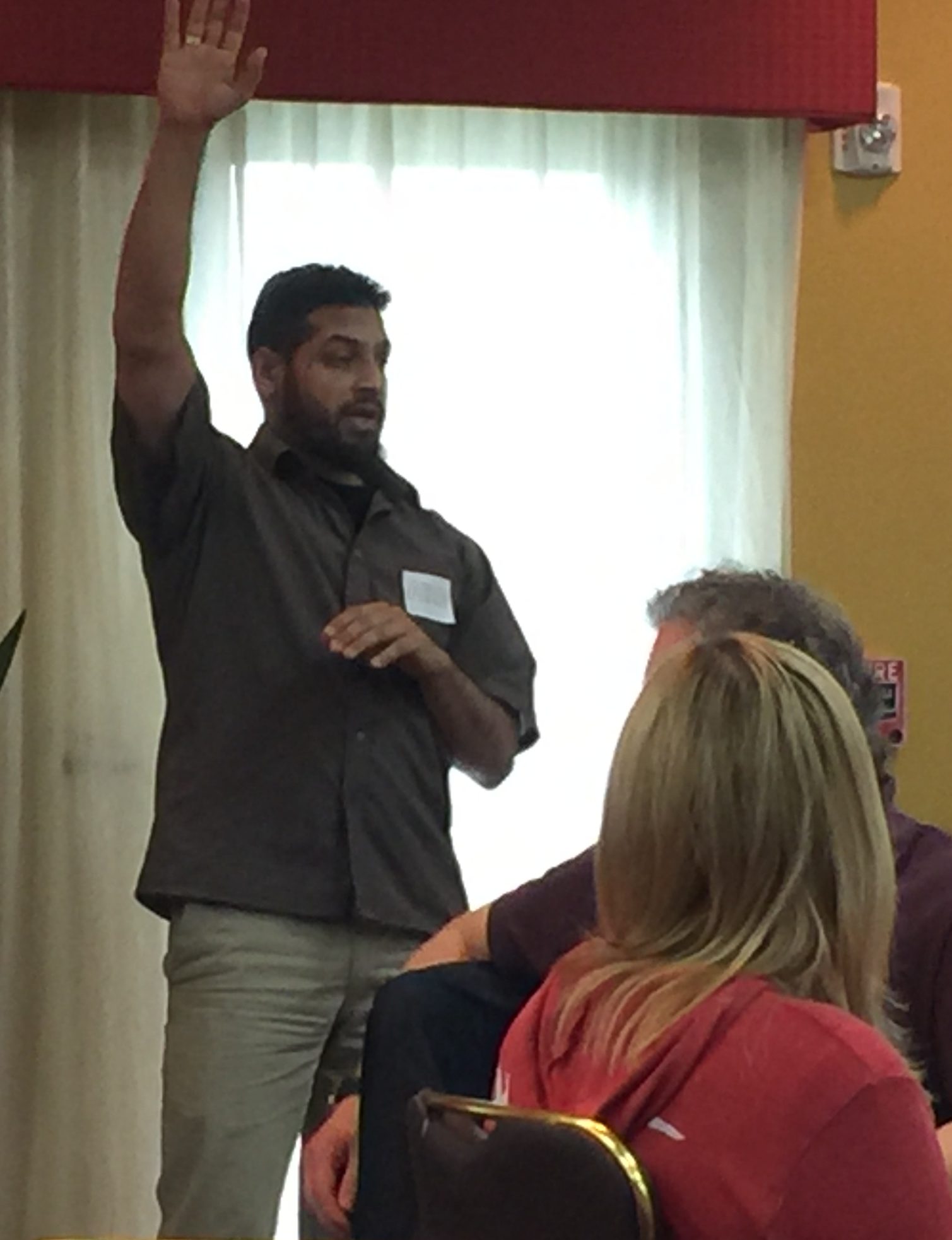
Several of my colleagues from SoCal and across the internets had already been to Sharon’s class, so I was prepared to not sit back and be lectured to. Evidently, I was not alone. The other attendees came prepared to make connections both with the concepts and each other alike. And talk about diversity! We had no fewer than nine participants from outside of North America, and over one-third of the classmates came from workplaces with no knowledge of Agile/Scrum. The mix of backgrounds made for an uptempo, dynamic two days.
Sharon did not disappoint. Her 4 Cs, six trumps and myriad sources (Sharon reads a lot of books!) offer enough possibilities and permutations that you’ll never know what to expect. We stood up, stretched, and moved about the room; we spoke, wrote, drew pictures, played games and told stories.
This was not your traditional training. The projector was always on, but the slides were only to complement the learning, not to serve as the primary conduit to our senses. And you can forget about those lectures that drone on! We (the participants) probably spoke as much as Sharon, if not much more than she. We reaffirmed our belief that learners want to be engaged, and there are unlimited ways to introduce content to make learning much more interesting and effective than by lecture.
By prompting learners to access each other’s knowledge and experiences, you turn up to 11 the efficacy of connecting with the content and concepts. This course lets you discover how the human brain really learns, and this knowledge liberates you from any traditional assumptions you had about learning. You leave having practiced dozens of simple, brain-based learning techniques that you can use without hesitation the next time you train, teach or coach others.
Calling all Scrum trainers
Do you know any CSTs ®, or someone interested in becoming a Scrum Alliance Certified Scrum Trainer ®? TBR is so practical for teaching about Scrum that it’s nearly a pre-requisite whether you’re starting a career as a trainer or simply find yourself facilitating groups and leading meetings. A number of us in the class are somewhere on our own journeys toward training designations, and we had a couple CSTs as co-learners over the two days. (Eight participants joined me after day #1 to record episode 46 of the podcast, and this was one big topic.)
I’ve seen this firsthand while co-training. By liberally applying TBR techniques in a CSM ® course, for example, participants more freely ask questions of their cohorts … and share solutions! They don’t have to be spoon fed; in fact, Sharon’s TBR methods improve learners’ ability to remember concepts and access resources well beyond any two-day session.
Bringing TBR to a place near you
How can you spritz up your own training experience? Do you work outside of a traditional Scrum/Agile workplace and want to imagine the possibilities? I encourage anyone who teaches, trains or mentors to consider attending a TBR workshop. Visit Sharon’s site – bowperson.com – for a current list of upcoming opportunities. There you’ll see that not all workshops are led by Sharon; there are about 90 of us (as of April 2016) certified to present her 2-day train-the-trainer program – the one I’ve described above.
Sharon, however, remains the sole provider of the certification class for TBR Certified Trainers (course and assignments separate from the 2-day workshop), and this allows for consistency among practitioners. (I also took on the additional work to become certified, and my own 2-day TBR courses are being planned for California and Arizona.)
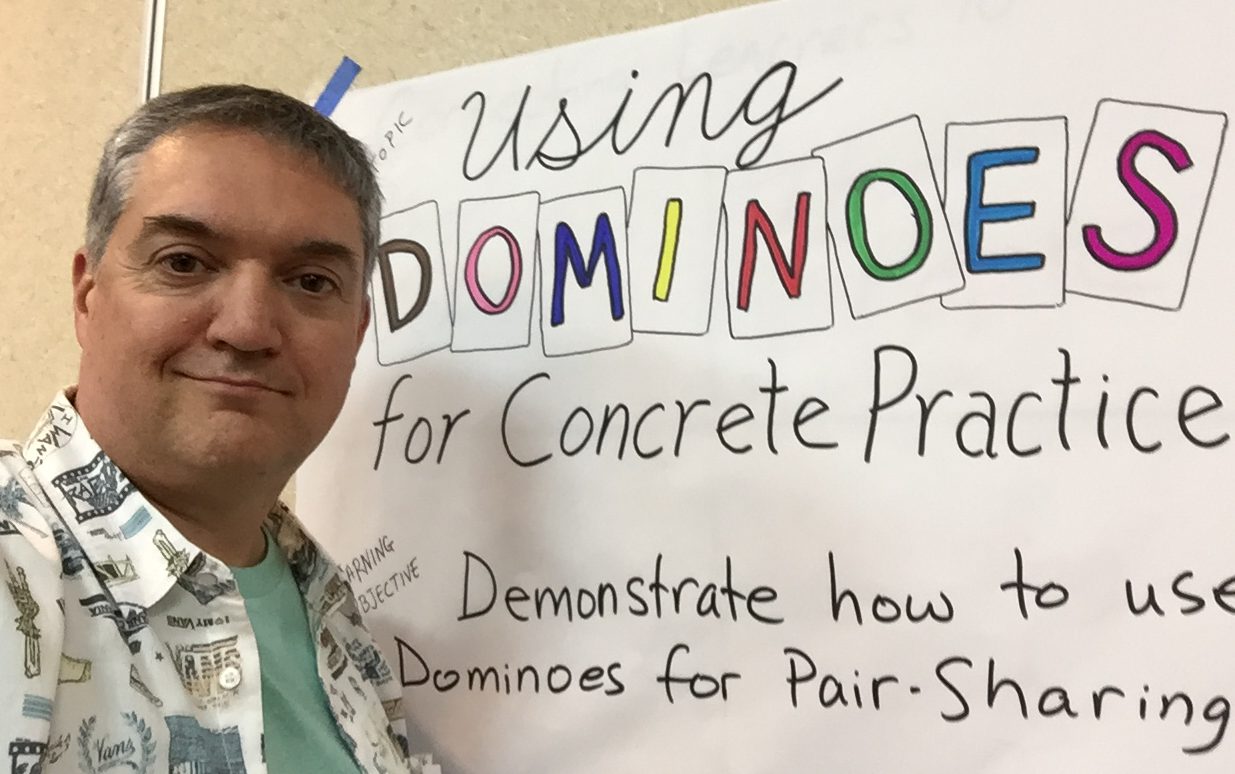
Sharon running the TBR Certified Trainer sessionI introduced a dominoe technique during my TBR Certified Trainer journey.
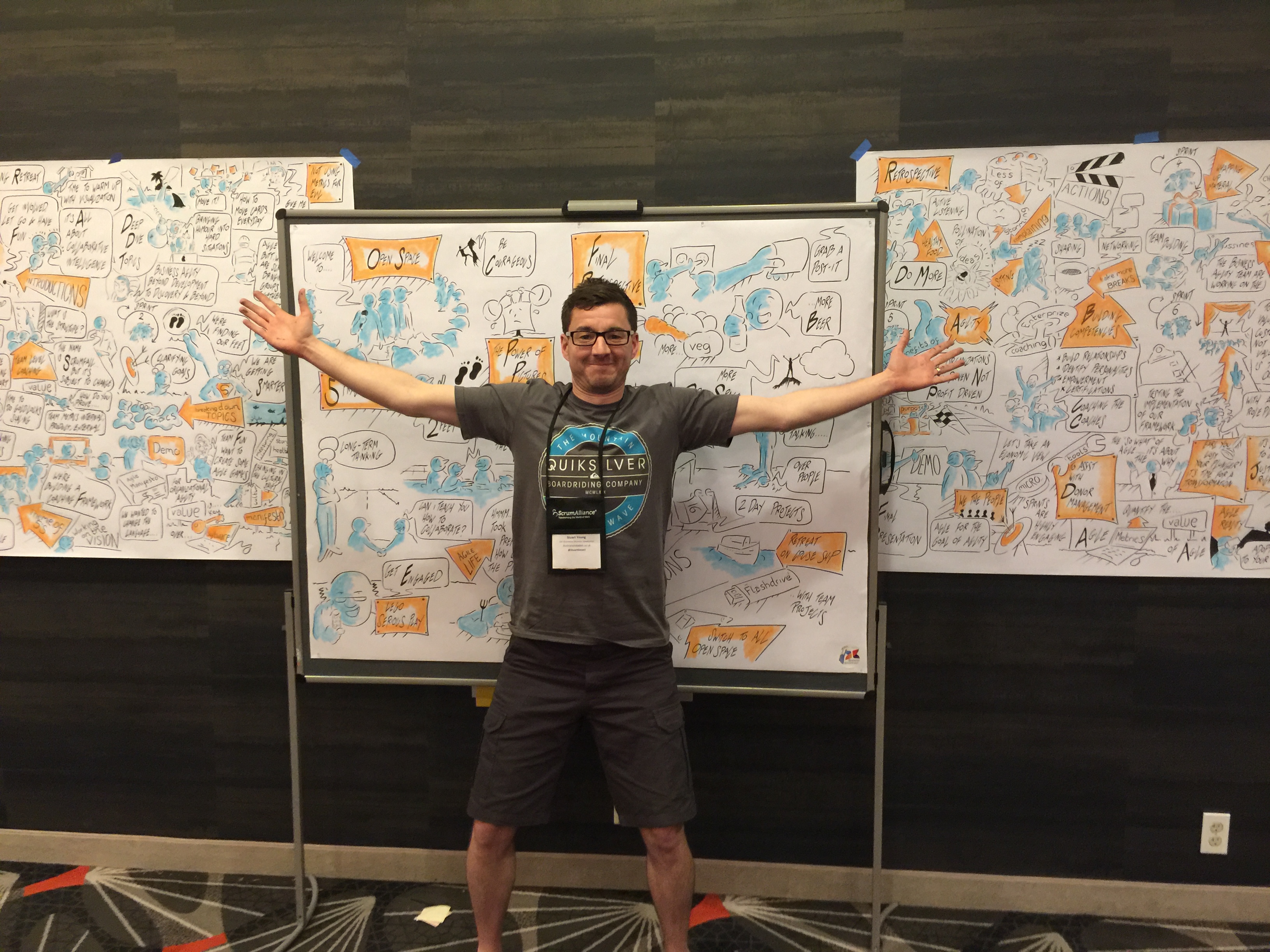
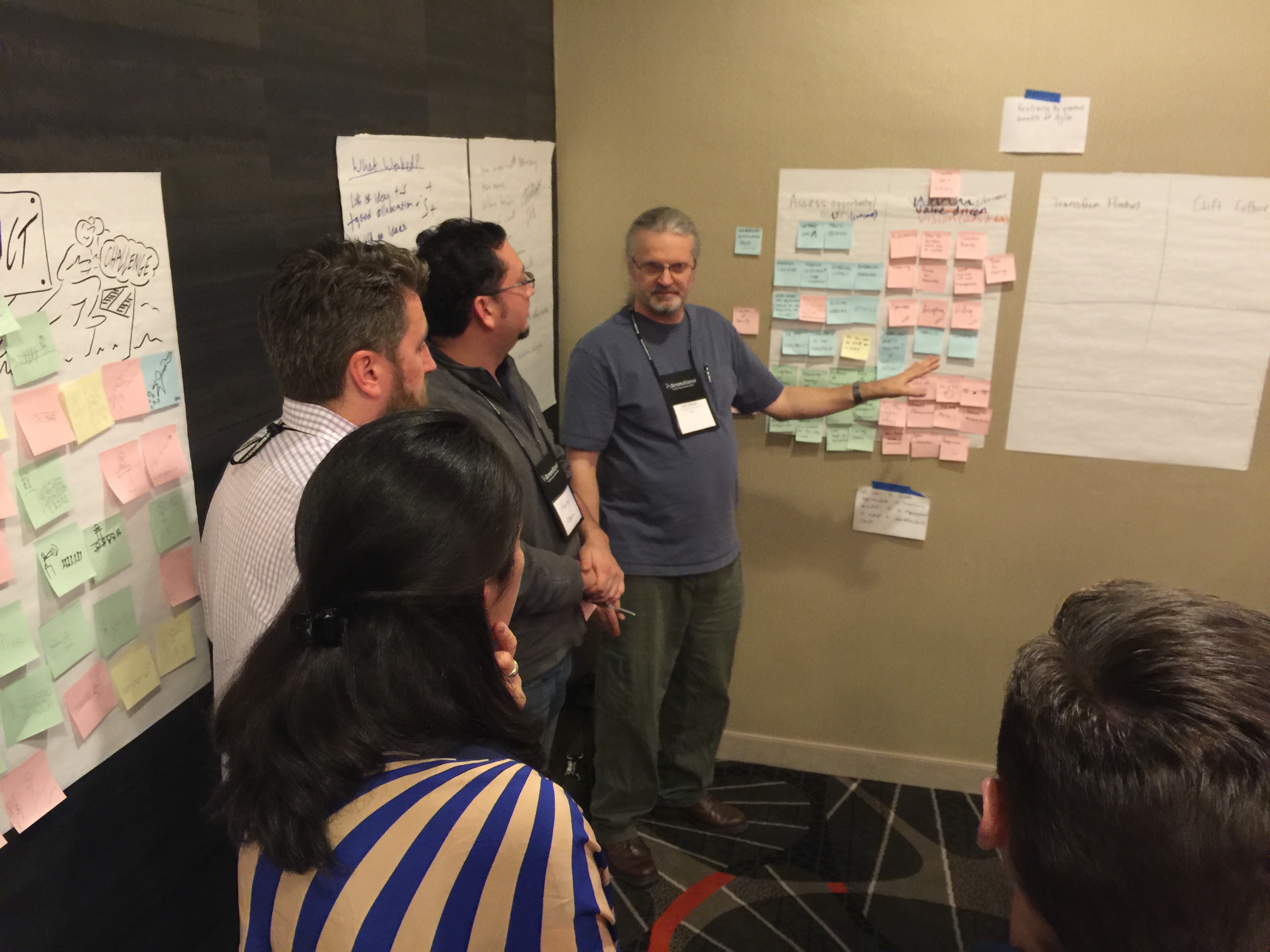
queuing up to announce topics for the retreatStuart Young, graphic facilitator in actionStuart with 3 days worth of documentation
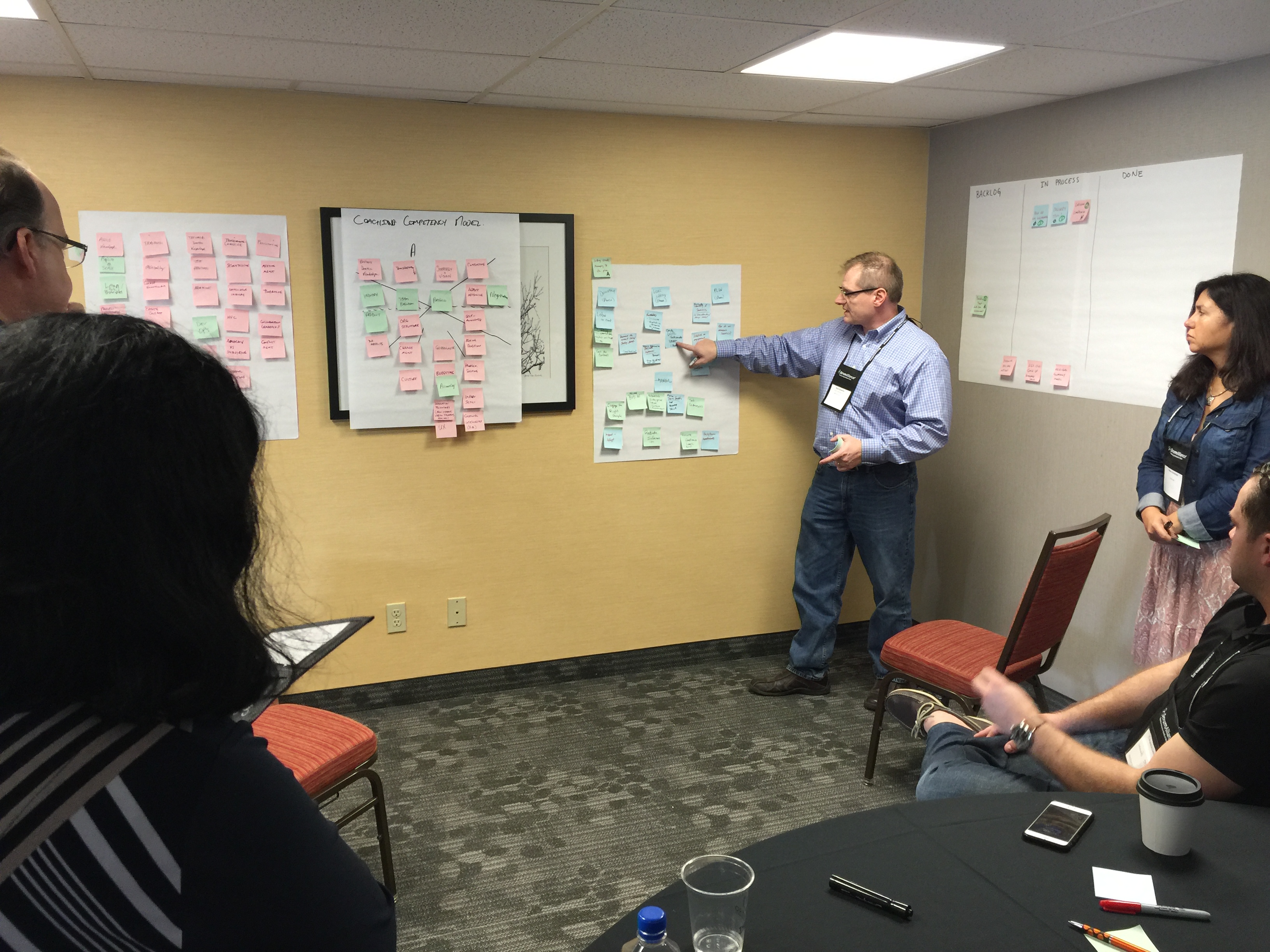
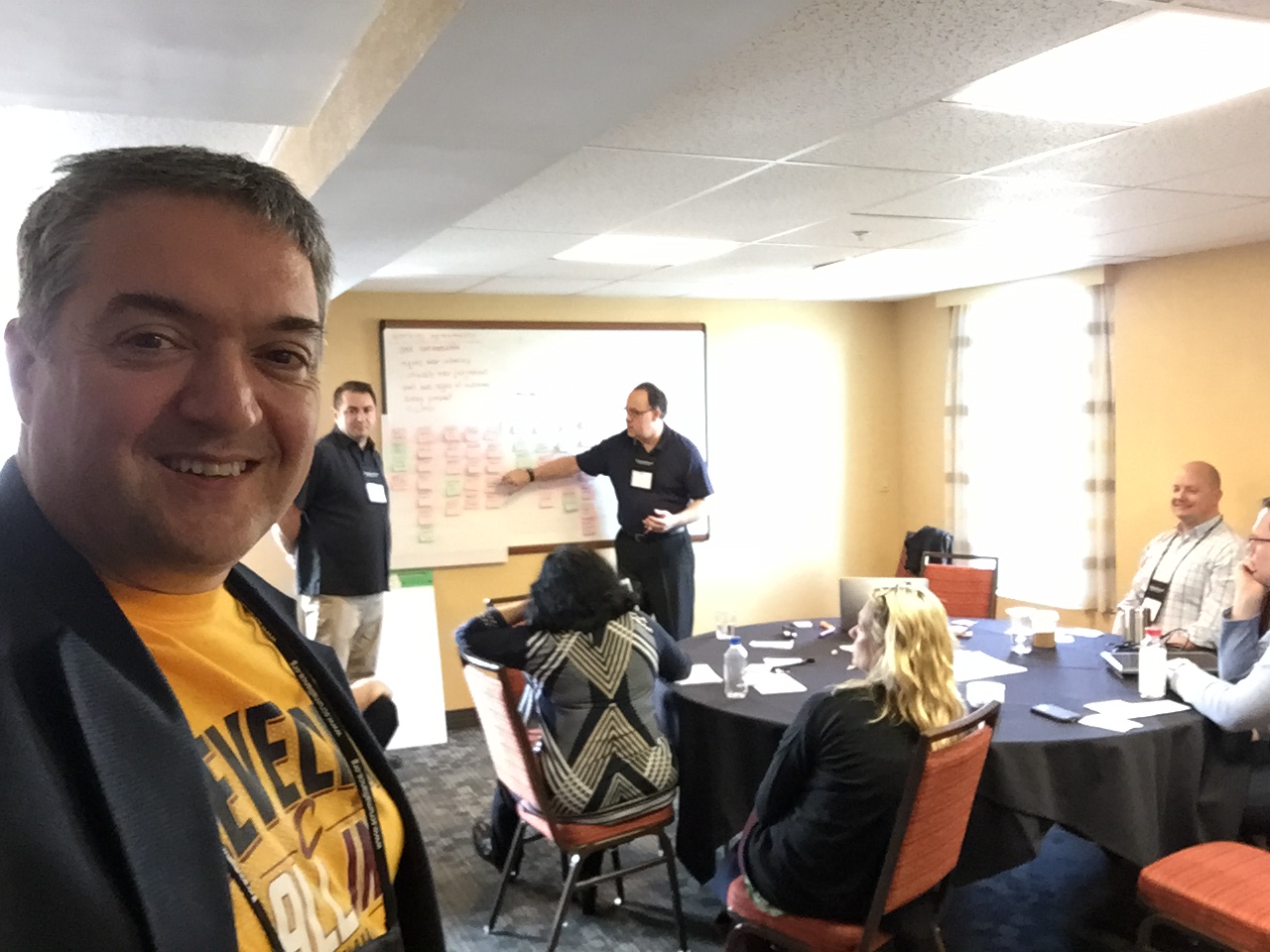
Russ walking through an internal team demoBernie Maloney as Product OwnerAndrew talks over the backlog with his teamJason & Ewan photobombing my selfie?
Recorded at the Scrum Coaching Retreat in San Diego with Vic (@AgileCoffee) and guests Bernie Maloney (@berniemaloney) and Kim Brainard (@agilebrain1). Dr.Dave joins near the end.
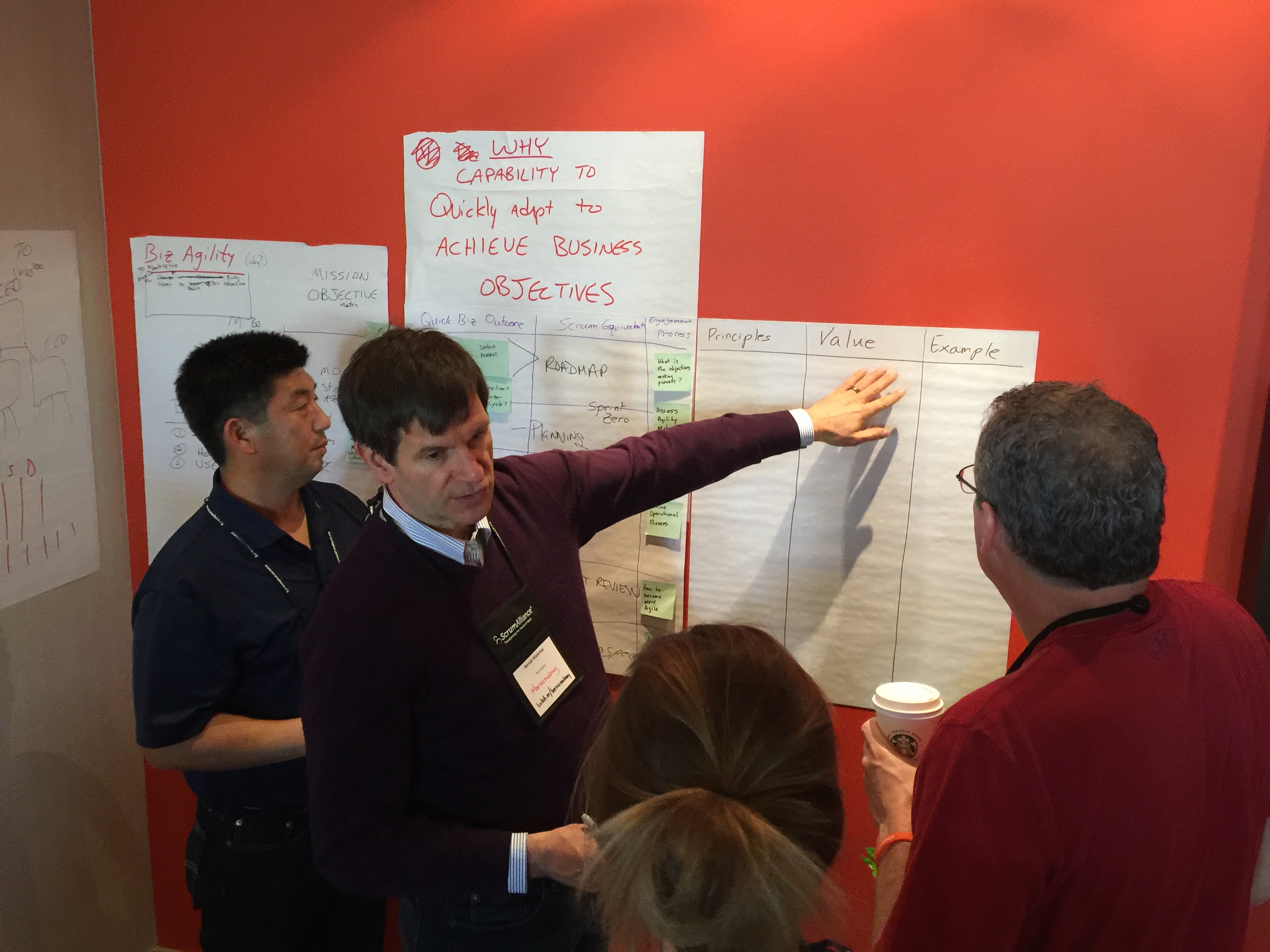
Bernie and Kim talk about their experiences with their team (Transformers!). For two+ days at the retreat, Bernie acted as the team’s Product Owner, while Kim served as Scrum Master. They share their perspective on how their topic evolved and how the team formed, stormed, normed and ultimately performed.
Have you been to a Coaching Retreat? Let us know on Twitter by using the hashtag #TellAgileCoffee
Vic is joined by Zach Bonaker (@ZachBonaker) and Larry Lawhead (@LarryLawhead) at the Cape Rey in Carlsbad for a lively morning of Agile and Coffee.
In this episode, our Agile heroes discuss:
Eight-minute talks
Why companies lose Scrum focus
Power of Metaphor
What have you been reading lately?
Here’s the long list of books that Larry started and Zach and I added to:
The Toyota Way – by Jeffery Liker
The Toyota Way to Lean Leadership – by Jeffery Liker, Gary L. Convis
The Spirit of Kaizen – by Leigh Ann Hirschmann, Bob Mauer
The Lean Startup – by Eric Ries
Kanban: The Kanban Guide – by Paul VII
The Innovator’s Dilemma – by Clayton Christensen
The Wisdom of Crowds – by James Surowiecki
Leaders Eat Last – by Simon Sinek
The Five Dysfunctions of a Team – Patrick Lencioni
Coaching Agile Teams – Lyssa Adkins
The Art of Thought – Graham Wallas
Larry has also been viewing a lot of webinars in Scrum Inc’s “Scrum Lab” with his prime membership, but there is also a lot of stuff on their “Scrum Lab Open” (click “Online Learning”).
Reach out to Vic (@AgileCoffee) and use the hashtag #tellAgileCoffee to interact with us on an upcoming episode.
Are you new to Scrum Coaching Retreats? Wondering what exactly you’re signing up for? I was in that position last year, and I’d like to share my observations.
It is not a conference, as there are no sessions or speakers. It is Agile Coaches working in Scrum teams, diving deep into topics that they are interested in.
– Mark Summers, Scrum Coaching Retreats
After having served for many years as a ScrumMaster and team-level coach, I wanted to stretch myself a bit and discover what it means to be a coach. I’d attended a few local gatherings and Open Space events, but the notion of a Coaching Retreat captured my interest big time. The idea of surrounding myself with others who were (or aspired to become) coaches sounded like an opportunity that I simply had to have.
I signed up for the SCR in Seattle 2015 and began researching what I could from previous retreats. I became active in the google group set up for our event and began asking questions, and I discovered that most others on the guest list were asking the same questions as me.
Do you have to be a coach to attend?
Will this event teach you how to become a coach (or get certified)?
Is it a passive experience where you show to listen to experts?
The answer to each of these three questions was “no”. Instead, I learned that each attendee would be expected to join a team to work on a project that will give value back to ALL attendees and to the greater Scrum community worldwide.
Cut to the chase: I went and had a blast. I’d never had such an effective three days with other practitioners, and the network I’d built was truly amazing! I refer regularly to the work that we did together – a terrific example of what a new team could accomplish inside a mini-scrum framework. AND the project had lasting benefits. I’ve used my team’s Coaching Dojo results (as well as the outputs from other teams) in both my previous engagement and my current workplace.
Recorded live from the Agile Open SoCal (Irvine, California), Victor (@AgileCoffee) is joined by three new guests: Aaron Griffith (@Aaron_Griffith), Colleen Kirtland (@CSKirtland) and Brock Nunn (@BANunn). In addition to general comments about the Open Space event, we also discuss:
Mob Programming and the Anti-Sprint Invasion
Were you surprised at the Agile Open?
The Importance of Culture and Behaviors in Agile
Agile for Social Betterment
If you missed the SoCal open space, consider attending Agile Open Northern California on October 9 & 10. More info at agileopencalifornia.com.
Vic (@AgileCoffee) attended the Scrum Alliance’s fourth Scrum Coaching Retreat in the USA. It was three days of examination of what it means to be a coach in a scrum environment and how we can improve our coaching methods worldwide.
In the first two days, participants had the opportunity to pitch a project they wished to focus on. Everyone then joined a project team and organized using scrum processes and roles. We had three sprints (spanning the two days) in which to iterate and increment on a delivery of our final products. The final day was devoted to an Open Space event and a closing retrospective.
One of the projects created can be found at AgileLeadershipToolkit.com. I’ll make others available once I receive explicit permission and links from their creators.
I produce my shows old school – by gathering participants in a room and recording with a bunch of mics. (I have a degree in audio engineering, so I’m a bit of an audiophile.) It’s fun, and nothing beats the face-to-face communication with all its nuances and clarity. We meet about twice a month in a mostly quiet space, and it takes my about 10-15 minutes to set up the equipment and do a quick check of levels.
For these bigger on location recording (from 4 to 6 attendees), I use a Behringer X1222 mixing board and Audio Technica ATR2100 or similar mics, plug it into my laptop and be good. [None of these links are affiliate links – just plain links to Amazon.] When it’s only a few of us, I’ll just bring my Zoom H5 handy recorder to blug mics in to – no need to lug my laptop around. In my home studio where it’s only me, I either plug my mic into the laptop or go through a smaller Behringer Xenyx mixer.
For post-production I use the free software Audacity (for PC). It does everything I need; I only do a minor amount of editing, and I like to tweak the levels somewhat. I export the file as MPEG Layer 3 (.mp3) format and load it into my local iTunes to enter the metadata (pretty much just cut-and-paste from a template). Then it’s time to upload to my audio host. Libsyn costs about $12 / month, but you can get a cheaper plan with them (or free elsewhere) if you podcast less frequently (I post at least two Agile Coffee podcasts a month and sometimes other projects as well). Libsyn also provides download stats. When it’s time to announce the new episode, the Blubrry PowerPress plugin (free) to my WordPress site does the heavy lifting by submitting the feed to iTunes & Stitcher as well as embedding an audio player on the post’s page.
Here are some of the Agile-themed podcasts I consume:
Victor (@AgileCoffee) participated in Scrum Day San Diego and interviewed a number of participants, including the winners of the Agile San Diego usergroup’s annual Agile Awards. Congratulations to Joe Dailey (winner of the Agilist of the Year, 2014) and to ID Analytics (recipient of the 2014 Agile San Diego Team Excellence Award). Also Dr. Dave Cornelius (@DrCorneliusInfo) and his son, Dave, accepted a gift on behalf of the 5Saturdays initiative which introduces Scrum to high school students.
Over 100 Scrum enthusiasts gathered on June 12th, 2015 in San Diego County to advance their understanding on how to launch Agile projects successfully. The theme of this second annual Scrum Day was “Well Begun is Half Done”, and featured speakers included Tirrell Payton, Marcelo Fernandez, Lauren Feehrer and Niv Genchel. Diana Larsen delevered a powerful keynote address on the topic of Lift-Offs and Agile Chartering, and a panel moderated by conference organizer Carlton Nettleton fielded questions from participants.
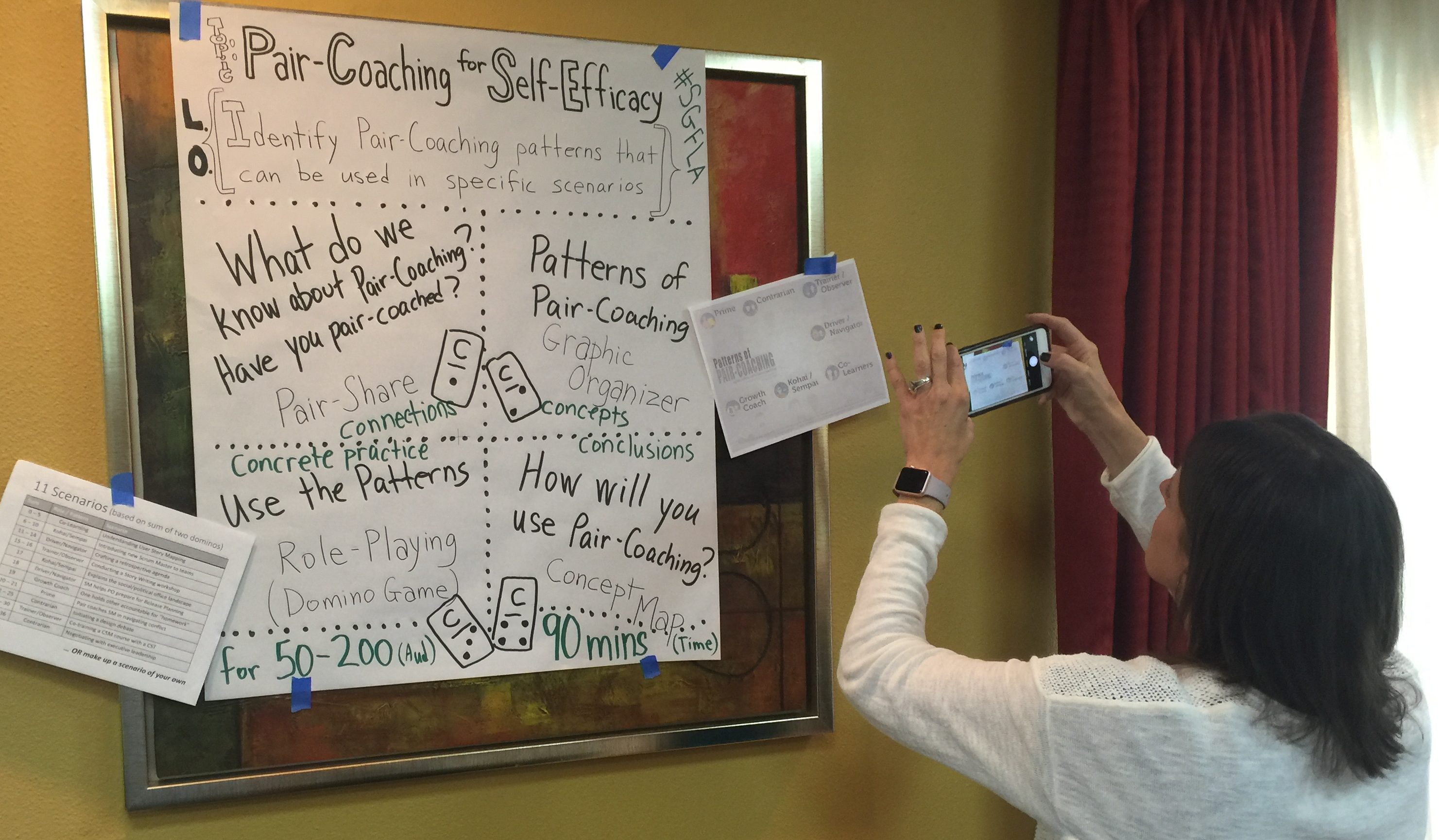
Back in March I led a pair coaching workshop at Scrum Day Orange County 2015. My goal with the session was to examine a few pair-coaching roles, share a list of competency areas for Scrum Masters, and use dominoes to demonstrate viable situations where pairing will help the coach, her team, or the larger organization.
No matter how good we are, we still can’t learn or do everything on our own. Whether you’re a Scrum Master, product owner or other member in an Agile workplace, you should consider using pair-coaching to raise your skill level, create positive change on your teams and improve relationships throughout the organization.
When I was approached to make a presentation on pair-coaching, I began asking around for comments. It was important to me that participants left with something tangible and valuable. I began building the content as a powerpoint deck, but early feedback (and my post-lunch time slot) suggested an interactive workshop made more sense.
Roles in Pair-Coaching
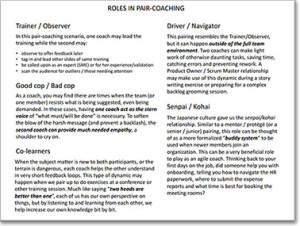
The goal of the workshop was to get participants thinking in terms of the many ways to use pair-coaching at the workplace. To do this, it was important to share the five pairing roles that I previously discussed:
Trainer / Observer
Driver / Navigator
Yin / Yang (I’ve renamed this role from “Good Cop / Bad Cop”)
Kohai / Sempai
Co-Learners
By introducing the five roles, I was able to give specific contexts in which to imagine using pair-coaching. (The handout above offers a summary of the five roles.)
* I owe much to Yves Hanoulle, a true creative collaboration agent, for his work identifying most of these roles (I am really just mucking with them). Yves has been a strong proponent of pair-coaching for many years, and most of the research I do on the subject turns up his name.
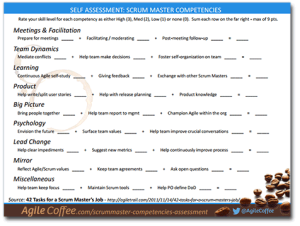
This assessment I put together was taken primarily from Bernd’s list of 42 tasks, though I overlaid the “grading” rubric to meet the needs of this game. (A big thanks to Fabrice Aimetti for translating this into french: Evaluation des compétences du Scrum Master.)
In the workshop, I ask the participants to give themselves a grade for each competency – from “0” equating to “no experience” to “3” meaning “expert”. They can sum the numbers across each row (competency group) to gauge what areas of coaching they’re good at and which could use improvement. (The point isn’t to be too critical here, but to have some grounding for the game.) The range of row-scores is zero (0) to nine (9), identical to the range of numbers on my dominoes.
Rules of the Game
Finally we get to the game itself. Each participant has a double-nine domino tile at their seat when they come in the room. They are asked to match one of their numbers to pair with another participant – this is done to get them out of their chairs and meet “random” people in the room. Example, if my domino has a two (2) and a five (5), I find another person with either of those digits.
When they form pairs (eg. both have a five (5) on their domino), they assume expertise levels based on the other number not used to match up. In my two and five scenario, I would use two (2) as my expertise level because I used the five (5) to meet another five. (It’s a pain to explain, but participants caught on quickly.)
Each pair then talks through a case of which roles they might play for a hypothetical scenario. For example, if a “two” (novice) is paired with an “eight” (expert), they might play out a Driver / Navigator situation. If the numbers are close but low (eg, 3 & 2), the scenario might be Co-Learners; and a 7 & 9 combo may yield a Good Cop / Bad Cop storyline.
Let me say that this early iteration of the game could certainly use some adjustment. I’m open to feedback even to the point of removing the dominoes altogether. Having said that, however, it seemed to work very well to stimulate role-playing and discussion in the workshop. So… success!
Below is a video of the session. The workshop begins by reviewing the five roles, and we start playing with dominoes approximately 22 minutes into the video. I am again grateful to Scott Dunn of Rocket Nine Solutions for the support, and to Cliff Rosa of Rosa Media Productions for the recording – thanks to you both!
I hope that you try this game and I welcome feedback in the comments here on this page or to me on Twitter at @AgileCoffee. Best of luck in your pairing!