agile

  • Encouraging a Bring Your SELF to Work Day with your teams

    Most of us work in teams. We go to work and see the same folks each and every day. We check in when we fill our coffee mugs, and we offer a “see ya tomorrow” when we leave. In between, we work with them – either as a group, in pairs or quasi-independently with occasional interactions. We might spend more waking hours with these people then we do with our family and non-workplace friends.

    But how well do we know them?

    If you’re working with or on a team, you have a vested interest in getting to know each other. Doing so develops trust, openness, respect, courage and commitment – many of the values we prize in Scrum and Agile. So here’s an exercise that you might consider: throw a “Bring Your Self to Work” Day. (I’d seen this listed as a topic at an open space, but I wasn’t able to attend, so you’re stuck with my imagination.)

    Before you laugh it off and say “don’t we do this every day already?” or roll your eyes at a seemingly trite concept, hear me out. I’m not about to preach being fully invested in being 100% present in your own daily activities (though that’s a noble goal). Rather what I’m proposing is a team-based exercise, whether on-site or off.

    In fact, despite the name, you might opt to meet at a restaurant or other non-work location. Holding an event after working hours sounds ideal, but it could be hard to pull off if co-workers have their own family- or commute-based constraints. And given the choice of having the whole team participate vs. a convenient time for most of the team, I’d choose the former.

    Here are a few suggestions for pulling this off.

    Keep it Social – meeting at the office always carries connotations of work. Heck, even the word “meeting” is so charged that you might consider referring to the gathering by another name. If budgets allow, consider social activities such as bowling or karaoke – making sure, of course, that the activity is something that all are able to take part in. And even if getting out of the office isn’t feasible, try to find a space far enough away from your work area that there aren’t the normal distractions.

    Share a Meal – something we all have in common is the need to feed ourselves. Whether you and the team decide to brown bag it out at a picnic table or in a bright conference room (preferably with natural light), or you head to a food court or restaurant, the gesture of “breaking bread” together is powerful and commonly accepted. If you splurge and have food brought in (bonus points if it’s not pizza), odds of participation increase greatly 😉

    Start Conversations Small – setting things in motion with a firm demand for all to open themselves up completely is the quickest way to kill the mood. Instead, begin by asking small, basic questions like:

    • what movies are good this season?
    • what was your favorite thing to do as a kid?
    • what was the worst thing about school?
    • hobbies / books / interests / etc.

    You can be creative – more creative than I am – but the point is to get people talking about themselves, maybe even laughing with each other. When this happens, we start to find unexpected connections and create or reinforce our bonds.

    I’ve done this with just about all my teams, and my favorite questions usually relate to our childhoods. Living on the west coast, I find that these teams are so diverse in terms of where they’re from and when they grew up, so the stories from our early years are always filled with new things to learn. Many remarks of “Oh, I remember that/those!” pepper the conversations, and people really open up and respect others more.

    Ask a Keystone Question – if and when the team is comfortable with the conversation, I encourage you to ask a deeper and more meaningful question, something that gets to the heart of your SELF. It doesn’t have to be too deep or serious, but it should allow for each member to see that they’re truly part of a trusting group. Something along the lines of “what’s one thing you have (talent, interest, experience) that you haven’t told anyone at work?”  I’ve heard answers ranging from “I used to sing opera” and “I’ve always wanted to visit Nepal” to much more intimate stories of personal loss or achievement.

    Again, the point isn’t to put people on the spot and be too vulnerable, but to show that it’s safe to share with this group, to show a bit of our true selves. You can’t (and shouldn’t try to) force connections and respect, but these connections are meaningful and usually happen as a result of honest and open conversation.

    Treat the Team as a Family – after the day is over and we’re back in our work routines, it’s very important to keep these bonds alive. Treat your team as an extended family. You don’t have to bring up the stories that were shared, but try to keep that emotion and connection with your co-workers as often as possible. It enables stronger, more natural collaboration and clearer communication. When appropriate, celebrate individual achievements as a team and help each other out with personal goals by occasionally checking in.

    And don’t make this a once-a-year activity. Anytime the team changes adds (or loses) a member, or if the group needs a collective pick-me-up, break out the invitations to another “Bring Your Self to Work” Day.
  • 29. Frederic Laloux and Dr. Clare Graves Walk into a Bar

    Announcing the brand new Podcast Topic Index. Search and sort to find any topic discussed on our podcasts.


    Victor is once again joined by Dale Ellis (@theDigitalDale), Jason Kerney (@JasonKerney), Zach Bonaker (@ZachBonaker) and Garrett Borunda (LinkedIn) at the Cape Rey in Carlsbad for a lively morning of Agile and Coffee.

    In this episode, our Agile heroes discuss:

    Reach out to Vic (@AgileCoffee) and use the hashtag #tellAgileCoffee to interact with us on an upcoming episode.

    announcements:

  • 28. “Agile” Under the Microscope

    Victor is joined by Dale Ellis (@theDigitalDale), Jason Kerney (@JasonKerney), Zach Bonaker (@ZachBonaker) and Garrett Borunda (LinkedIn) at the Cape Rey in Carlsbad for a lively morning of Agile and Coffee.

    In this episode, our Agile heroes discuss:

    ACCUSWest 2015 archive at AgileLib.net, courtesy of Tobias Mayer

    Coming soon is Dr. Dave‘s 5 Saturdays program’s Train the Facilitators workshops: May 30th and June 6th. More info at 5Saturdays.org

    Reach out to Vic (@AgileCoffee) on Twitter and use the hashtag #tellAgileCoffee to interact with us on an upcoming episode.

  • 27. Putting Together an Agile Coach Camp

    To share an abundance of topics, Victor is joined by Dale Ellis (@theDigitalDale), Larry Lawhead (@LarryLawhead), Jon Jorgensen (@waterScrumBan) and Dr. Dave Cornelius (@DrCorneliusInfo) in the Irvine studio for a lively morning of Agile and Coffee.

    In this episode, our Agile heroes discuss:

    • A brief report on last month’s ACCUS West
    • Applying Agile to students
    • Hang the DJ
    • Can Agile practices change us psychologically?

    We’re at a crossroads, and you can help! Is this format working for you? How can we improve upon it? AND – what ideas do you have for recording the sessions over the interwebs? Would you like to join one? Let Vic know by twitter or email.

    Mark your calendars for Dr. Dave’s 5 Saturdays program’s Train the Facilitators workshops: May 30th and June 6th. More info at 5Saturdays.org

    Reach out to Vic (@AgileCoffee) on Twitter and use the hashtag #tellAgileCoffee to interact with us on an upcoming episode.

  • 26. Visiting the Agile Open Northwest

    This episode is composed of two separate sessions. The first part was recorded on location at the 9th Annual Agile Open Northwest (Portland, OR) with Ben Sherwood, Michael Wolf, Alicia Lanier and Ian Savage.  For the second part, I returned to the home studio and was joined by Dale Ellis, Jon Jorgensen, Brett Palmer and Larry Lawhead.

    Between the two sessions, we dove deep into the following topics:

    1. Facilitation Tools – Groupwork cards
    2. Adaptive Action and Agile – aka What? So what? Now what?

    One more huge shout of gratitude to Ian, Alicia, Michael and Ben, to Diana, Tündér, Ainsley and all participants and volunteers at #AONW.

  • 25. Agile Planning and User Story Mapping

    Vic is joined by Brett Palmer (@brett_palmer) and Larry Lawhead (@LarryLawhead) for a lively morning of Agile and coffee.

    Today our heroes discuss the following topics:

    • Agile Planning – discussed WSJF and Donald Reinertsen’s book “The Principles of Product Development Flow”
    • User Story Mapping
    • Roles in pair-coaching
    • Servant Leadership

    AgileGathering.com has the info about our upcoming Agile Coach Camp US West, April 10-12, 2015

  • 24. How to Budget for Agile Software Development

    Vic is joined by Brett Palmer (@brett_palmer), Jon Jorgensen (@waterscrumban) and Larry Lawhead (@LarryLawhead) for a lively morning of Agile and coffee.

    Today our heroes discuss the following topics:

    • Agile Budgeting – Larry lent his copy of Agile Estimating and Planning to his CEO. Will he get it back?
    • The power of Standing for Agile – getting the team to arise
    • Mike Lavery (@baconPhilosophy) asks about tips for moderating the initial Product Backlog meeting
    • Framework Regression pain – when can a team create a circle of excellence?

    Want more? Visit our brand new forums on the AgileCoffee website.

    AgileGathering.com has the info about our upcoming Agile Coach Camp US West, April 10-12, 2015

  • 23. We Discuss a Listener’s Topic!!

    Vic is joined by Dale Ellis (@thedigitaldale), Dr. Dave Cornelius (@DrCorneliusInfo) and Larry Lawhead (@LarryLawhead) for a lively morning of Agile and coffee.

    Today our heroes discuss the following topics:


    Want more? Visit our brand new forums on the AgileCoffee website.

    AgileGathering.com has the info about our upcoming Agile Coach Camp US West, April 10-12, 2015

  • 22. Are You Changed by Agile (or Coffee)?

    For this episode, Vic is joined by Larry Lawhead (@LarryLawhead), Dale Ellis (@thedigitaldale) and Dr. Dave Cornelius (@DrCorneliusInfo) for quick and efficient morning of Agile and coffee.

    Today our heroes discuss the following topics:

    • How does practicing Agile/Lean change people?
    • Roadmapping with Lean Coffee and Six Thinking Hats – see Vic’s recent post
      • book: Six Thinking Hats by Edward DeBono
    • Techniques for remote retrospectives
      • mentioned: zoom.us, trello, kanban flow, surveymonkey, etc.
    • Scrummaster as leader – getting things done
      • book: The Servant by James C Hunter
    • What makes a good scrum coach?

    Want more? Visit our brand new forums on the AgileCoffee website.

    AgileGathering.com has the info about our upcoming Agile Coach Camp US West, April 10-12, 2015

  • Patterns in Pair-Coaching

    Agile coaching demands many skills of the practitioner. In addition to being conversant in common agile processes, we are also called to serve as teacher, facilitator, mentor, counselor, negotiator, and leader. Of course, this is a partial list; there may be no limit to the skills identified as valuable to our coaching profession.

    Where did you learn these skills? If you weren’t born with these skills or have them injected into your being, how did you acquire them? Books, videos and training courses can help, but on the job is perhaps the quickest and most lasting method. Did you have someone training you how to train? How to facilitate or lead your first team? Chances are that you were thrown into the fire like most of us.

    Now imagine that you did have a mentor to guide you along your path, someone to show you how to lead a retrospective and offer advice when your team just stared at you dumbly. I’m not talking about your CSM instructor or your boss who gives you encouragement once a week, but an honest-to-goodness partner with you on the job.

    That is one pattern of pair-coaching.

    Here is another example. Let’s suppose that you’re involved in a transformation effort. You and a colleague want to introduce agile methods and scrum practices that will represent a different way of working, but some team members want nothing to do with this – for them the medicine is hard to swallow.

    This is a case where your partner might play a more “prescriptive” role, clarifying the need and structural changes with little emotion invested in her delivery. Your role as the counterpart would be to offer deep empathy – providing an open ear or a shoulder to cry on – while also offering a softer interpretation of why the organization is trying this change. You, the “progressive”, help the transition to this different mindset.

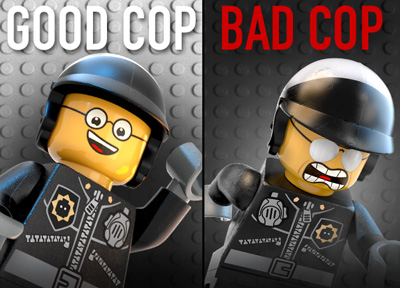
    good cop / bad cop
    More than a “good cop / bad cop” relationship, the Contrarian pattern allows for divergent viewpoints to both be expressed equally.

    Pair-coaching is not anything new in the workplace. You may be practicing one or more patterns without being aware of it. Once made visible, the value of coaching in pairs should become apparent.

    There are many patterns that pair-coaches can fill. A few that we will examine include:

    • Trainer / Observer
    • Driver / Navigator
    • Contrarian (Progressive / Prescriptive)
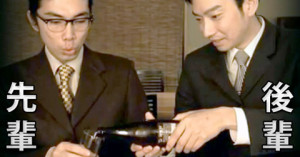
    • Senpai / Kohai (mentor / protege)
    • Co-learners

    Trainer / Observer

    co-training

    With new teams adopting agile practices, it’s almost certain that training will be necessary. Often a trainer works alone; showing up to set up the room, greet arriving participants, communicate & demonstrate the concepts, take questions and mind the agenda (including breaks, meals and other time-boxed events). That could be quite a lot to handle, especially if the audience is large or varied in their prior experience with (and reception of) the topics.

    With a partner, much of the burden is eliminated from the primary trainer’s responsibility.  (For non-training events, a co-facilitator becomes useful for the same reasons.)

    In this pair-coaching scenario, one coach may lead the training while the second may:

    • observe to offer feedback later
    • tag-in and lead other slides of same training
    • be called upon as an expert (SME) or for her experience/validation
    • scan the audience for outliers / those needing attention

    Driver / Navigator

    Han had Chewie. Michael Knight had KITT.

    This pairing closely resembles the Trainer/Observer, but it can happen outside of the full team environment. In other words, an activity with only the coaches participating (e.g. drafting a retrospective agenda) can benefit from a second pair of eyes. Similar to how developers may engage in pair-programming, two (or more) coaches can make light work of otherwise daunting tasks, saving time, catching errors and preventing rework. A Product Owner / ScrumMaster relationship may make use of this dynamic during (for instance) a story writing exercise or preparing for a complex backlog grooming session.

    To extend the navigator role a bit, an internal coach may pair with an external coach to provide a much needed map of the terrain. When outsiders come to an engagement, the organization may be charged with mistrust and fear (why else would the outsider have been brought in?). Having a “man on the inside” helps to get the “lay of the land” with regards to the organization’s culture and politics, potentially helping to avoid the minefield altogether.

    The Contrarian

    The earlier example showed one instance of this common usage. As a coach, you may find there are times when the team (or one member) resists what is being suggested, even being demanded. In these cases, try having one partner offer a prescriptive approach, while the other provides counterpoint. If there’s a bitter pill, there should be empathy.

    Additionally, when constructive conflict is habitually missing from team discussions, introducing an alternate viewpoint may encourage necessary debate. Two partners can take opposing views in the effort to model a constructive dialogue.

    Senpai / Kohaisenpai-kohai

    The Japanese culture is rich in traditions of well-defined social behaviors, and the senpai/kohai relationship is one of the most popular. Similar to a mentor / protege (or a senior / junior) pairing, this role can be thought of as a more formalized “buddy system” to be used when newer members join an organization (eg. company, school, sports club). The senpai serves as a mentor of sorts, showing his charge the ropes – guiding, protecting and teaching. The kohai offers his full attention and respect to the senior, even though the two may be very close in age and status.

    This can be a very beneficial role to play as an agile coach, whether you are the mentor of the mentee. Thinking back to your first days on the job, did someone help you with onboarding, telling you how to navigate the HR paperwork, where to submit the expense reports and what time is best for booking the meeting rooms? In Japan, the two may bond over dinners or drinks engaged in casual conversations, and the senpai/kohai relationship often lasts many years or decades, usually well past the individuals’ tenures at the organization.

    Co-learners

    When the subject matter is new to both participants, or the terrain is dangerous, each coach helps the other understand in very short feedback loops. Much like infantry soldiers on a dangerous battlefield, high-performing teams offer encouragement to each other as they make their way through uncharted and challenging territory.

    The experience levels of both participants are often close in this role, neither being expert in the new subject or working environment. This type of dynamic may happen when we pair up to do exercises at a conference or other training session. If you’ve ever joined a coaching circle, your assignment could call for you to relate your experiences to a partner who’s job might be to actively listen and understand before swapping roles.

    Much in the same vein as saying “two heads are better than one”, I think of the parable of the blind men describing the elephant. Each of us has our own perspective on things, but by listening to and learning from each other, we help increase our own knowledge bit by bit.

    What’s Next?

    Those are five of the roles that can be played by coaches who work in pairs. It’s likely that there are more, whether obvious or not. The goal of this post was to define these roles so that we can have a common set of terms to use when discussing how to become better coaches by working in pairs. Although I believe that there is very large value to be discovered by pair-coaching, I am not calling for every coach to work with a partner on all projects at all times.

    Over the next several months I will be attending Agile Opens (#AONW begins this week), Coach Camps (I will host ACCUS in Irvine) and a Coaching Retreat, and at each event I will do my best to engage others in this dialogue. It’s my hope to use the matrix below to see where we feel each role fits best given the situations I just described. If you see me there, feel free to pair up with me!